Biology of Prokaryotes and Gametes
Research lines:
Environmental Microbiology. Biology and Applications of Halophilic Microorganisms
- Halophilic archaeal proteolytic systems: molecular and functional characterization.
- Regulation of carotenogenesis in haloarchaea.
- Bacterial chemotaxis, basic and applied aspects.
- Biopolymers in marine microorganisms.
- Bioproducts derived from archaea and halophilic bacteria: isolation, characterization and biotechnological applications (carotenoids, metal nanoparticles, enzymes).
Reproductive Biology
- Sperm physiology and seminal quality. Study of the molecular and cellular mechanisms that regulate the acquisition of fertilizer capacity, including training processes, intracellular signaling and functional stability post-cryopreservation.
- Seminal plasma and intercellular communication in mammals. Analysis of the role of secretory molecules and extracellular vesicles in the male reproductive tract in modulating sperm function and fertility.
- Cryobiology and sperm cryopreservation. Development and optimization of freezing/thawing protocols in species of productive interest, integrating strategies to improve cryostability and post-thawing quality.
- Development of biotechnological inputs for assisted reproduction. Generation of recombinant proteins and formulation of defined media for applications in cryopreservation and sperm management.
- Experimental models and quality control in embryology. Production of mouse embryos as a system for validation and quality control of media, inputs and procedures used in human embryology laboratories.
Members

Andreina investigates sperm physiology, focusing on the molecular mechanisms that regulate the acquisition of fertilising capacity. It studies the role of secretory molecules of the male reproductive tract, including extracellular vesicles, in sperm signaling and functionality. Apply this knowledge to the development and optimization of cryopreservation protocols in different species, with impact on reproductive biotechnology and genetic conservation.

Inés studies the Romboides intramembrane protease family in Haloferax volcanii. It has generated mutant strains in genes of these proteases to elucidate their function and potential substrates. It also explores the production of metal nanoparticles in H. volcanii and their bioactive properties.
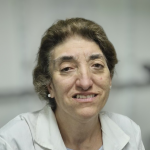
Karina studies the production of bioplastics (polyhydroxyalkanoates) by moderate and extreme halophilic microorganisms (archaea) especially using waste carbon sources. She is interested in characterizing the production of PHAs in microorganisms that she isolates from sea water in order to analyze their potential as new biotechnological tools. She investigates specific PHAs-associated proteins in Halomonas titanicae (moderate halophilic) and Haloferax mediterranei in order to understand their role in microbial biopolymer metabolism. In addition, she is interested in the study of chemotaxis and bacterial mobility focusing on chemotactic responses of the environmental bacterium Halomonas titanicae KHS3.

Lucía is interested in the development of methods of vitrification of sole sperm for application in aquaculture and in the study of the physiology of these gametes.
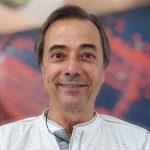
Roberto participates in several subjects developed in the laboratory, currently in the proteomics experiments in H. volcanii and the construction of mutant strains suppressing lethal phenotype generated by LonB deficiency.

Micaela has built mutant strains of the archean LonB protease and has characterized them at a phenotypic and proteomic level, currently exploring the role of LonB in the regulation of carotenogenesis. Participates in the characterization of carotenoids of the bacterioruberine type (Bctr).

Anabella investigates the role of decapacitant proteins on signal transduction leading to training in the mouse model. She generates recombinant proteins for their application in the reproduction of heterologous species of livestock interest.

Sofia studies the regulation of N-glycosylation of proteins and carotenogenesis by membrane-associated proteases in the haloarchaeal model Haloferax volcanii.

Tomás is a PhD student who investigates extracellular vesicles of seminal plasma, their influence on sperm physiology and possible application in sheep production.